

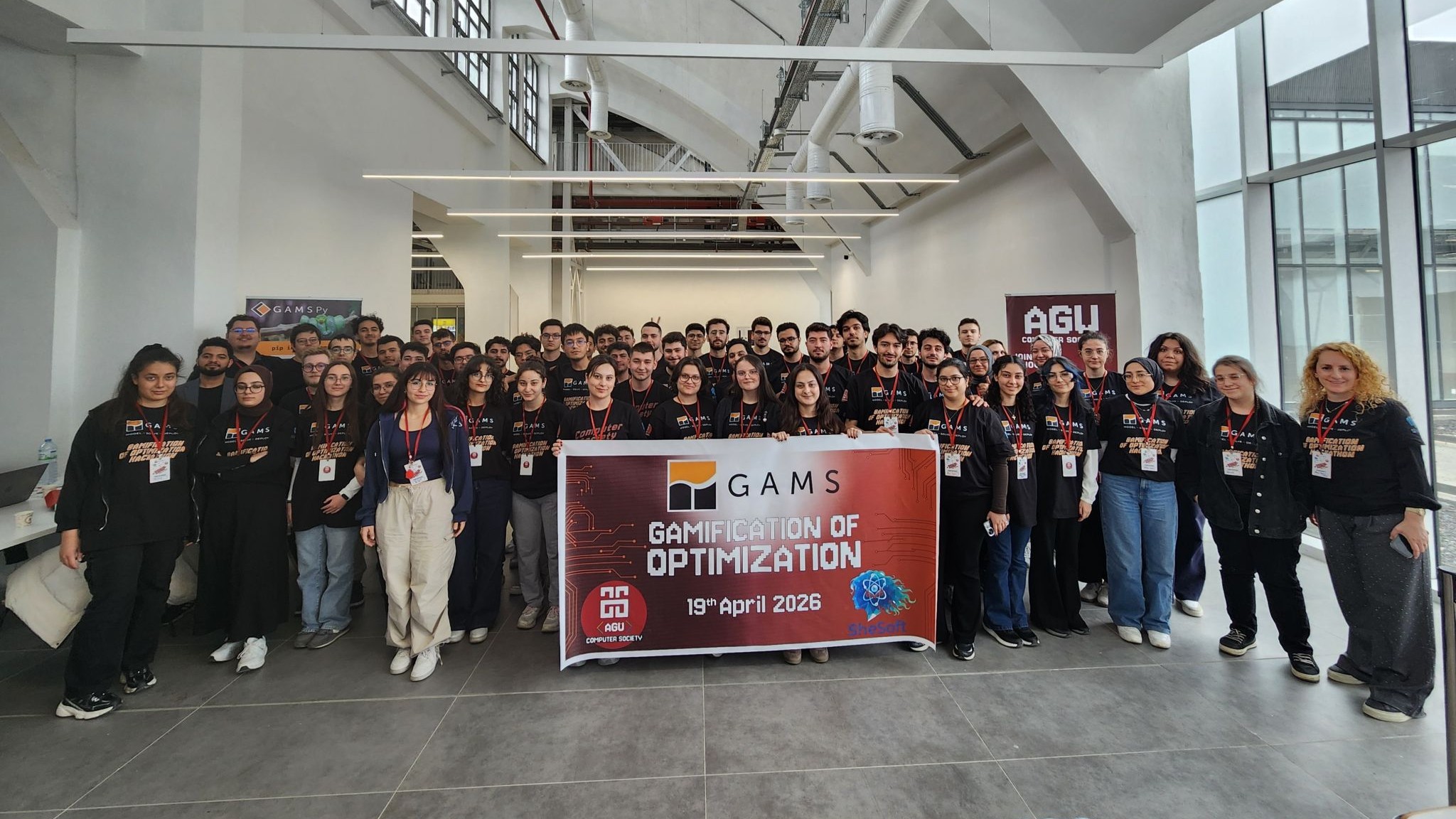
Last Sunday, the campus of Abdullah Gül University (AGU) in Kayseri, Turkey, became the site of a high-energy collision between mathematical modeling and creative game design. Sponsored by GAMS and organized by the AGU Computer Society, the “Gamification of Optimization” Hackathon challenged 68 students -organized into 25 ambitious teams- to do the impossible: design, code, and model a functional game driven by optimization logic.
The mission was simple but not without its challenges: participants were tasked to build a game that teaches the world about optimization, with creativity being the only rule in place. Starting at 8:00 am, students from multiple departments, from computer science to industrial engineering, showed up with their laptops, a fresh supply of coffee, and a willingness to explore what it takes to make complex math feel like play. The day was a 12-hour sprint of rapid prototyping, where teams moved from initial brainstorming to building functional optimization games and pitching them to an expert jury.
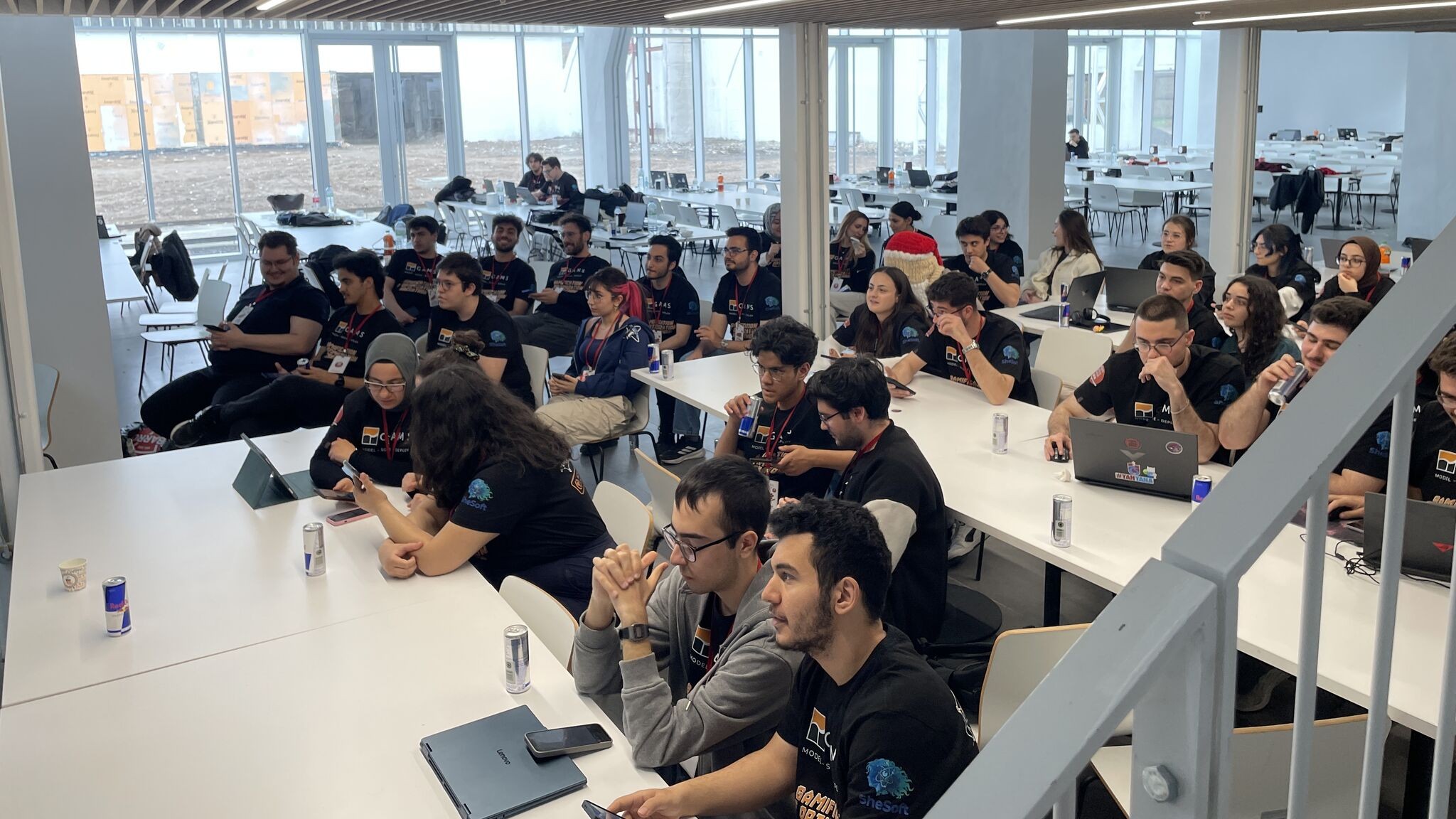
As the day unfolded, the quiet coding atmosphere gave way to a hub of collaboration and constant strategic pivots. Students were allowed to use AI tools to accelerate their asset generation and debugging, which meant they could focus their limited time on exploring and developing their best ideas. By mid-afternoon, screens were a sea of pixel art, world building, flowchart logic, and mathematical models.
The energy reached its peak at 7:00 PM during the demo session. Each of the 25 teams had exactly three minutes to pitch their concept and showcase their live gameplay to a panel of judges. We saw everything from cybersecurity simulations and supply chain restaurant management to dark tycoon games and evolutionary creature builders. The marathon concluded at 10:00 PM with a celebratory winners’ ceremony, where the top three teams were recognized for successfully turning rigorous mathematical constraints into intuitive, engaging, and outright cool experiences.
A Homecoming for the GAMS Team
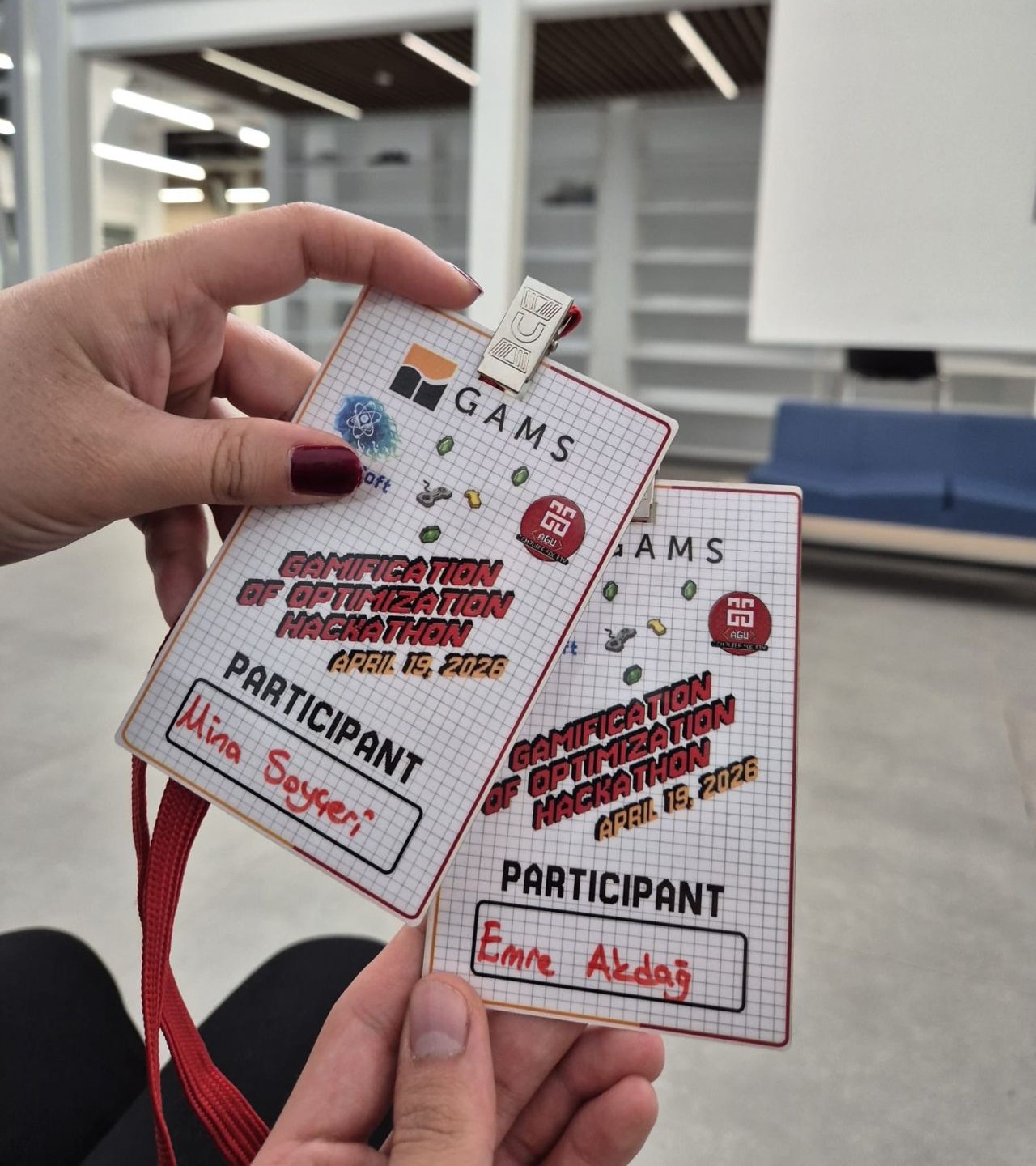
The event held special significance for GAMS, as a group of our software engineers are AGU graduates. Returning to their alma mater to judge the 25 competing teams was a full-circle moment for them.
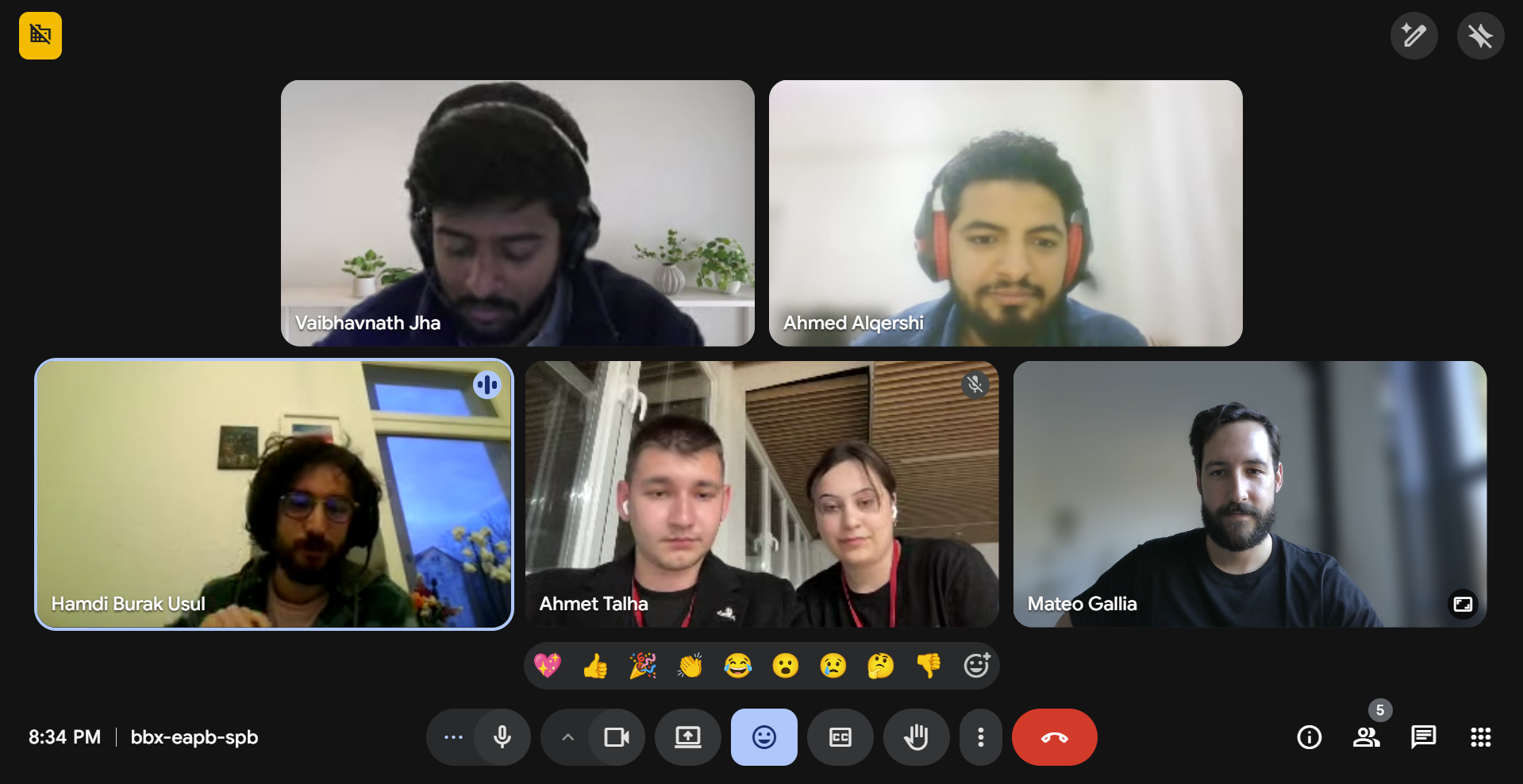
“Conceiving an idea and developing a functional demo in under 12 hours is no small feat,” said Burak Usul, one of our Senior Software Engineers and AGU graduate who helped evaluate the 3-minute pitches. “Pitching that concept before an audience of 60 is even more demanding. We were genuinely impressed by the students’ ability to design and implement such innovative gamification ideas.”
Supporting the students on the ground was Ahmed Alqershi, GAMS Operations Research Analyst, who provided technical support to help help teams bring their creative visions to life. “The energy was fantastic! It was great seeing students develop their ideas throughout the hackathon and learn more about GAMSPy and how it can be embedded into some cool games,” Ahmed noted.
The Winners’ Podium
While the focus was on creativity, the technical depth was remarkable; all 25 teams delivered impressive results, with ready-to-play games, smart optimization integration, and catchy presentations. After careful consideration, our jury awarded the hackathon winners title to three projects:
🏆 1st Place: Echoes of the Future (Team GAMS N’ ROSES)
Taking the top spot was a project that turned an urban headache —noise pollution— into a rockstar-level challenge. In a stylish, pixelated city, players step into the shoes of a concert organizer for the legendary band “Roses” who has to design the ultimate concert layout without making the neighbors call the cops.
The “mathematical brain” behind the music is GAMSPy, which solves the optimization problem instantly as you drag potential concert locations across the map. The engine calculates the maximum safe decibel levels based on the specific noise sensitivity of 26 different building types —ensuring libraries stay quiet while the stadium rocks. At the end of the round, the game compares your manual layout against the absolute mathematical optimum to see if you have the ears of a roadie or the mind of a mathematician.
🥈 2nd Place: Last Drop (Why Not Team)
Coming in second was an impactful project that turned water scarcity into a fun, well-designed tactical puzzle. In Last Drop, players have to place a limited number of water sprinklers across fields with diverse, thirsty crops —each with its own “Goldilocks” zone for water. Optimization is the heart of this engine; the game solves a variation of the Facility Location Problem to find the perfect placement that accounts for irrigation waste, crop sensitivity, and underwater limits. With real-time heatmap feedback, the game uses GAMSPy to show you the absolute optimal strategy, teaching players that in farming, every drop counts.
🥉 3rd Place: Robot Tycoon (Team Joes)
Rounding out our podium was Robot Tycoon, a dark and delightfully morbid tycoon-style experience. Forget theme parks or pizza shops; in this game, you’re managing a factory that processes and delivers robot corpses to their final resting place.
But don’t let the theme fool you —this was one of the most technically ambitious projects of the day, featuring four different optimization layers. Players have to solve Vehicle Routing for supply collection, Worker Assignment for specialized processing, 2D Bin Packing for efficient crating, and the Traveling Salesperson Problem (TSP) for final delivery routes. By comparing player efficiency against GAMSPy’s calculated optima, the game encourages you to run a robot disposal operation with industrial precision.
Beyond the podium, GAMSPy was the “mathematical brain” for nearly every single project in the competition. Because GAMSPy provides a high-level Python interface, students were able to integrate complex solvers into diverse game environments —from web-based apps to desktop simulations— without leaving the Python ecosystem. In simple words, GAMSPy acted as the ultimate facilitator, allowing teams to prototype ideas fast while handling data-heavy tasks. This synergy between Python’s flexibility and GAMS’s solving power meant that even teams with little prior modeling experience could implement advanced logic to drive their gameplay.
Bridging Academia and Industry
This hackathon is a great example of the GAMS Academic Program. By collaborating directly with universities, we aim to show students that the tools used in high-level industrial logistics or energy modeling are the same tools they can use to build a cyberpunk factory sim or a band’s city tour.
Following a preparatory webinar on mathematical optimization held the Friday before, the students used GAMSPy to handle the mathematical logic driving their games. They also made savvy use of AI to accelerate asset generation and debugging, proving that with the right tools, 12 hours is more than enough time to build something remarkable.
Ready to build your own optimization-driven world? Check out our GAMSPy Quick Start Guide and see how our academic resources can support your next project.
Project Index & Repositories
Some of the games are already available for for playing! You can check them out in their github repositories:
-
GAMS N’ Roses – Smart Noise Optimization
-
Absolute Manager Simulation – Football Transfers and Tactics
-
The Factory Lab – Cyberpunk Factory Management
-
Seat the Drama – Wedding Chaos Optimizer
-
Smart City Builder – Urban Layout & Connectivity
-
Last Drop / Waterpuff – Crop & Sprinkler Distribution