


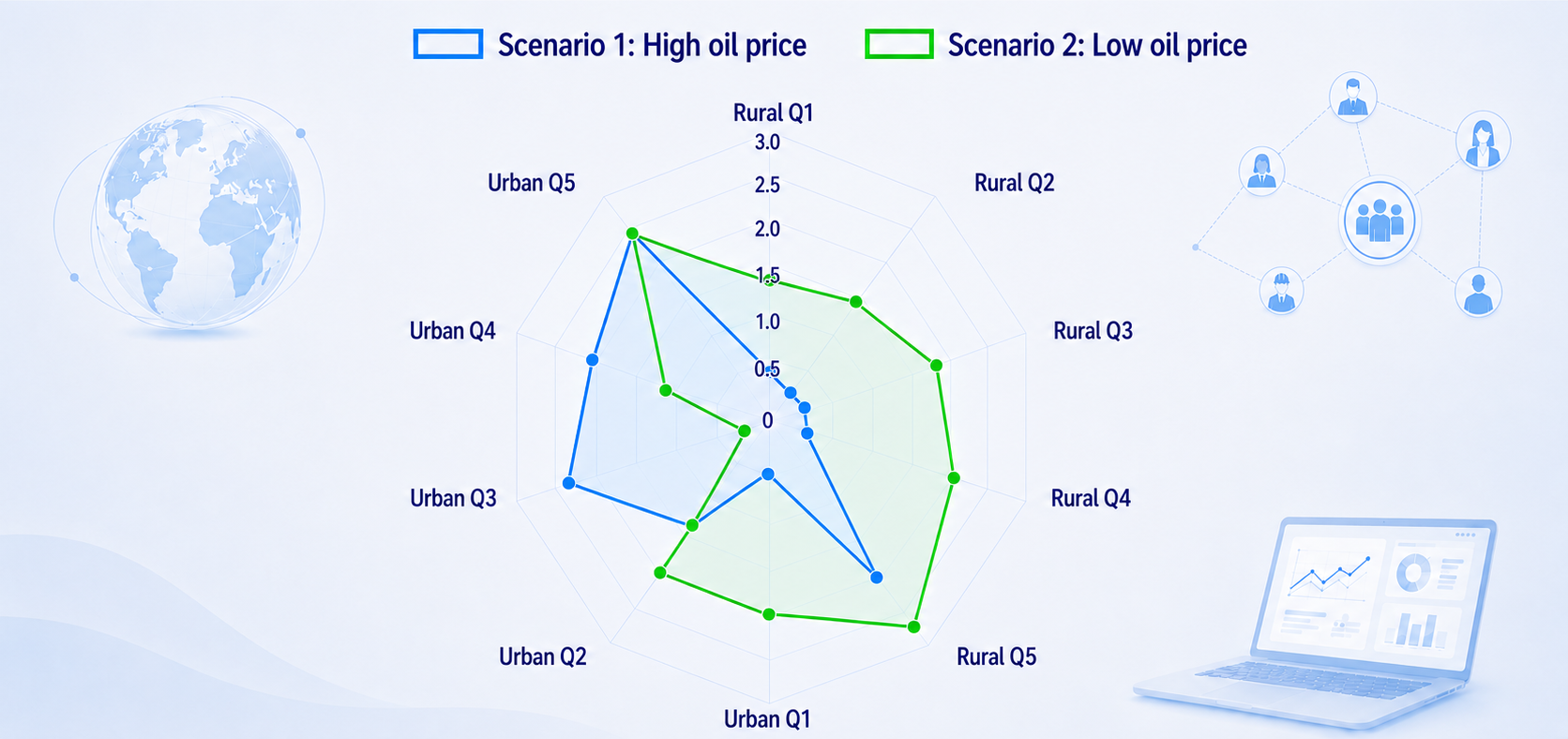
“GAMS MIRO offers a way to guide users through the often complex world of CGE modeling by distilling the parts that are relevant to the question they are looking at.”
— Dr Lindsay Shutes, Economist and CGE modeler, Elevate Economics, UK
The CGE Adoption Problem: Powerful Models, Limited Reach
Computable General Equilibrium (CGE) models are among the most sophisticated tools available for policy analysis. Governments use them to evaluate tax reforms, trade agreements, climate policies, and investment programs. International organizations rely on them to understand the interconnected effects of global economic change. Researchers use them to explore scenarios that would be impossible to test in the real world.
Yet despite their analytical power, many CGE models face a surprisingly practical challenge: accessibility.
A typical CGE model is developed and maintained by a small group of experts who understand its assumptions, calibration procedures, closure rules, and data structures. The number of people who need to use the model, however, is often much larger. Policy analysts, consultants, ministry staff, researchers, and decision makers all depend on the model’s insights without necessarily understanding its technical implementation.
Over time, workflows tend to become increasingly complex. Scenario definitions are stored in spreadsheets, assumptions are scattered across configuration files, and reporting often requires extensive manual processing. While these approaches work, they can make models difficult to operate, maintain, and share.
This creates a gap between model developers, analysts, and policymakers. The challenge is no longer simply solving the model, it is ensuring that the model can be used consistently, transparently, and efficiently by a broader audience.
GAMS MIRO addresses this challenge by providing an app-like interface for CGE models1. Rather than replacing the underlying model, MIRO transforms it into an interactive tool while preserving the full flexibility and power of the original implementation.
From Model to Policy Platform
A CGE model is much more than a collection of equations. In practice, it functions as a scenario generation engine, a policy analysis framework, and a repository of institutional knowledge. Years of experience are embedded not only in the model itself, but also in the workflows surrounding it: calibration procedures, reporting standards, policy experiments, and best practices for interpretation.
GAMS MIRO helps package this expertise into a structured application. Instead of distributing model files, spreadsheets, and documentation separately, model developers can provide users with a guided interface that captures the organization’s preferred workflow. Users can configure assumptions, define policy experiments, execute model runs, and analyze results without needing to understand every technical detail of the implementation.
This approach offers significant benefits. Training requirements are reduced, workflows become more consistent, and the risk of accidental misuse decreases. Analysts can focus on economic questions rather than technical procedures, while model developers remain responsible for maintaining and improving the underlying model.
The result is a shift from using CGE models as specialist research tools toward using them as a policy platform.
Designing Better Policy Experiments
Most CGE projects ultimately revolve around evaluating policy alternatives. Whether the objective is assessing a carbon tax, analyzing a trade agreement, evaluating a fiscal reform package, or exploring productivity improvements, the central task is translating policy questions into model experiments.
Traditionally, this process often involves modifying spreadsheets, editing configuration files, or changing model parameters directly. While effective for experienced users, these workflows can become cumbersome when large numbers of scenarios need to be explored or when multiple stakeholders are involved.
GAMS MIRO enables a more structured approach. Policy instruments can be represented as dedicated interface elements that guide users through the design of policy experiments. Common CGE levers such as tariffs, tax rates, transfers, productivity shocks, emissions caps, investment programs, or trade-cost reductions can be included as structured inputs with clear descriptions and sensible defaults.
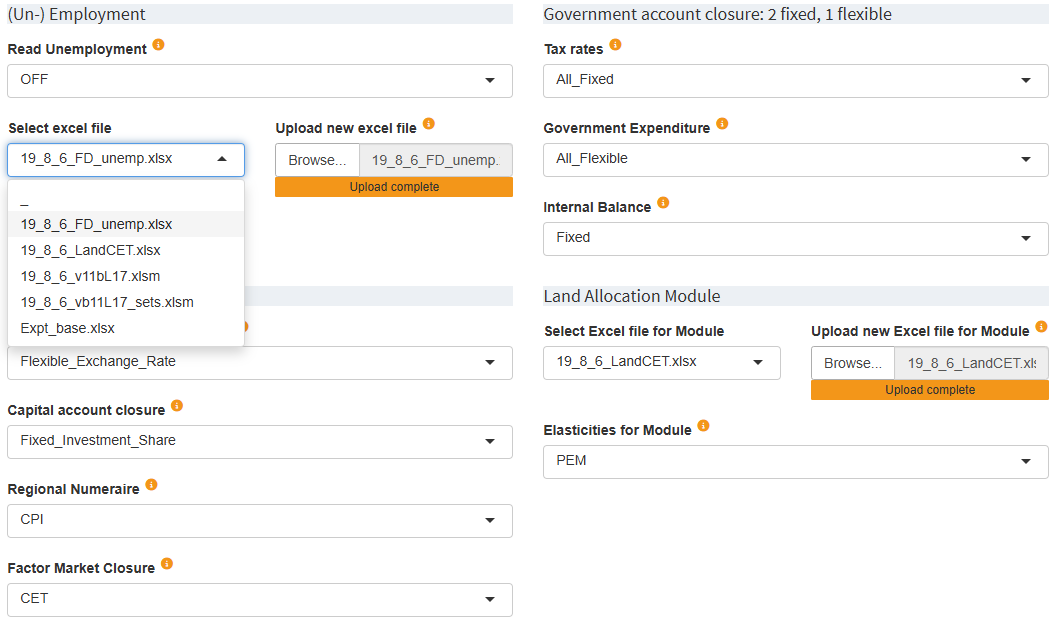
Figure 1. Input data can be entered and edited using tables, sliders, drop-down menus, checkboxes, and other interactive controls.
The interface can also enforce validation rules that help prevent unrealistic or inconsistent scenarios. Users receive guidance throughout the process, reducing the likelihood of errors while making experiments easier to understand and reproduce.
This transparency benefits both experienced modelers and occasional users. Analysts can better understand the assumptions underlying a scenario, while model developers gain confidence that users are working within a controlled and well-defined framework.
Scenario Management and Policy Comparison
Running a CGE model is only part of the analytical process. In many projects, a real challenge is managing the growing collection of scenarios that accumulate over time.
A typical study may involve multiple baselines, policy variants, sensitivity analyses, and robustness checks. Large projects can easily generate hundreds of model runs, each representing a different combination of assumptions and policy settings.
Without a structured workflow, keeping track of these scenarios becomes increasingly difficult. Analysts spend time searching for files, reconstructing assumptions, and manually comparing outputs. Valuable insights may be lost simply because previous experiments cannot be located or reproduced efficiently.
GAMS MIRO addresses this challenge through integrated scenario management. Inputs and outputs are stored together as complete scenarios, creating a centralized repository of model experiments. Users can organize scenarios using tags, search and filter previous runs, and revisit historical analyses whenever needed.
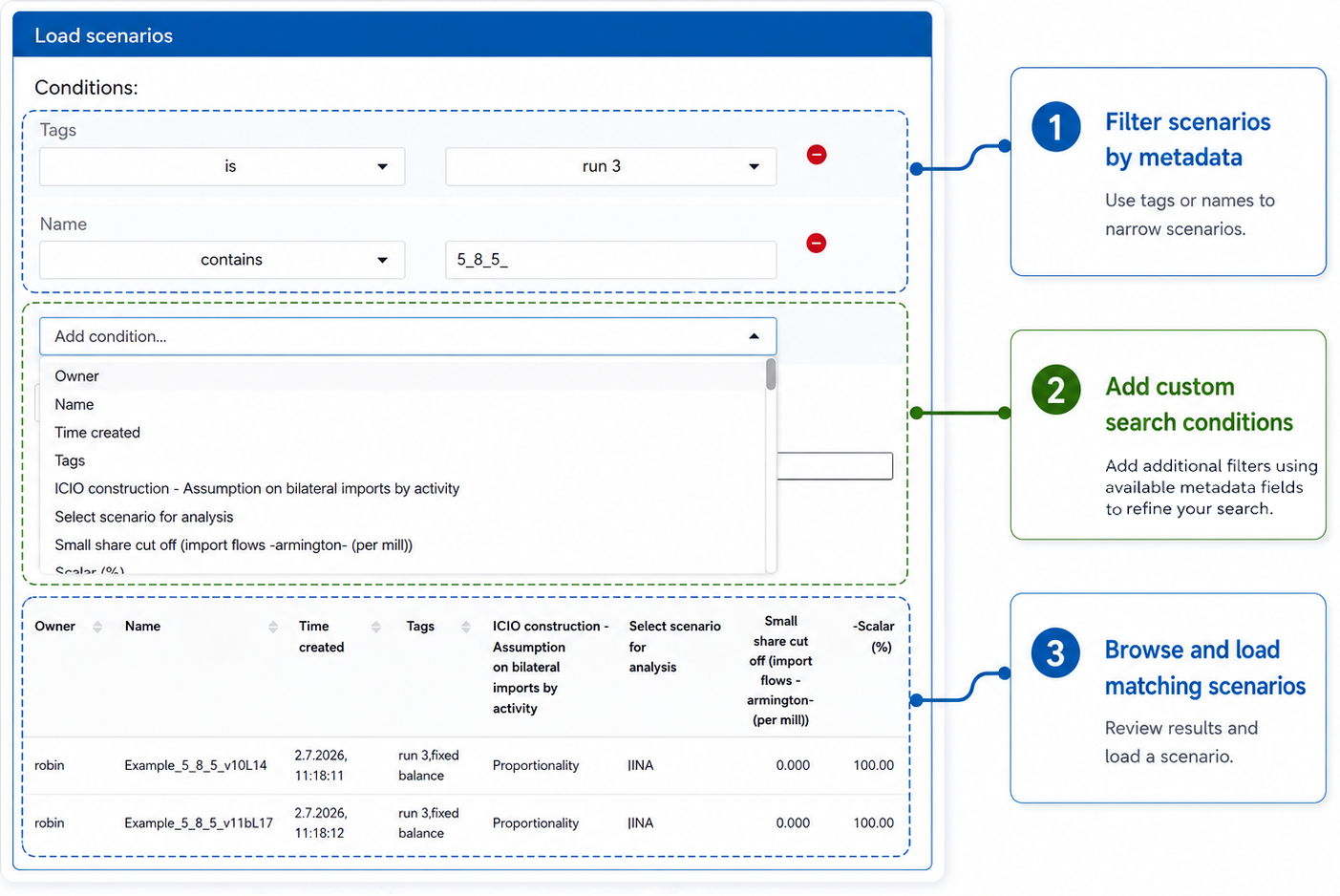
Figure 2. Scenario management helps users organize, search, and revisit model runs together with their corresponding inputs and outputs.
Just as importantly, MIRO makes it easy to compare scenarios. The real value of CGE modeling rarely comes from a single simulation. Policymakers want to understand how alternative policies compare, how sensitive results are to assumptions, and whether conclusions remain robust under different economic conditions. Scenario comparison tools allow analysts to evaluate policy packages side-by-side, compare alternative closure rules, and explore competing assumptions without manually combining spreadsheets or building custom reports.
“The scenario comparison feature is very powerful for communicating the impacts of different policies and testing the robustness of results to different assumptions.”
— Dr Lindsay Shutes
One very useful capability is baseline comparison. In many CGE projects, analysts are less interested in absolute values than in deviations from a reference scenario. GDP changes relative to the baseline, sectoral output differences, welfare impacts, or shifts in trade flows are often the quantities that matter most. Traditionally, these comparisons require additional reporting variables, post-processing scripts, or spreadsheet calculations. GAMS MIRO can perform many of these comparisons directly within the user interface. Analysts can select a baseline scenario or reference record and immediately view relative changes, absolute differences, normalized values, or raw results without modifying the underlying model. This significantly reduces reporting effort and makes it easier to explore alternative perspectives on the same simulation results. Instead of rerunning the model or creating additional reporting structures, users can switch between level values and deviations from a reference case interactively.
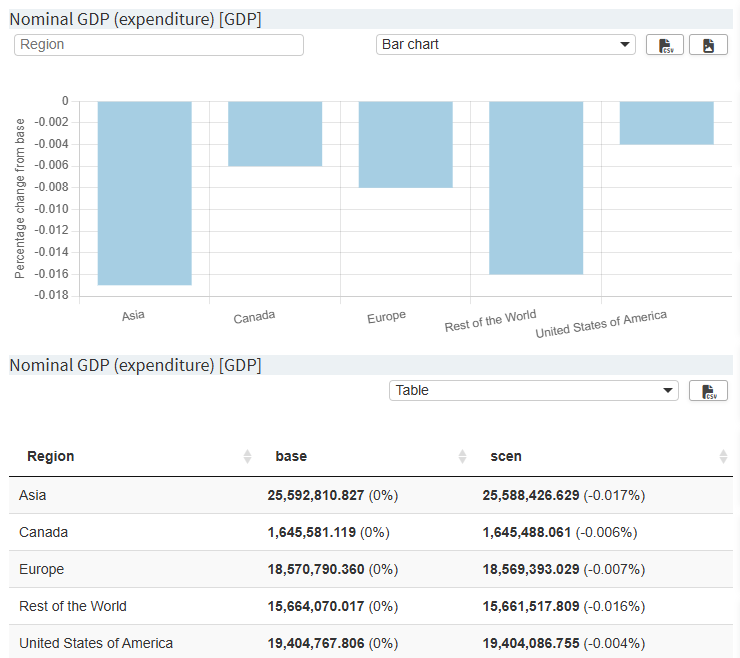
Figure 2. Charts and tables can display results relative to a selected baseline scenario, helping users compare policy impacts directly in the MIRO interface.
Automated Sensitivity Analysis
CGE analysts rarely trust a result based on a single set of assumptions. Robustness testing often requires exploring how outcomes change under alternative elasticity values, policy settings, closure rules, or technology assumptions.
When connected to GAMS Engine, MIRO can execute Hypercube Jobs that automatically generate and evaluate large numbers of scenarios across multiple input dimensions. Instead of testing assumptions one by one, analysts can systematically explore an entire policy space and identify where a particular result sits within the broader range of possible outcomes.
This approach is particularly attractive for sensitivity analysis, uncertainty assessment, and robustness testing, areas that are central to many CGE studies.
Exploring High-Dimensional Results with Pivot Tables and Views
One of the greatest strengths of CGE models is their ability to generate highly detailed results across multiple dimensions: sectors, households, factors of production, commodities, regions, and time periods.
This richness is also one of the greatest challenges. Whether working with Social Accounting Matrices (SAMs) during calibration or analyzing simulation results, economists frequently need to navigate large, multidimensional datasets. Traditional workflows often involve exporting data to spreadsheets and repeatedly rebuilding reports to answer recurring questions: Which sectors gain or lose? Which households are affected most? How do trade flows change across regions?
GAMS MIRO enables users to explore these data interactively through its Pivot tool. Users can aggregate, filter, and reorganize both calibration data and model outputs directly within the application. Analysts may begin by exploring a SAM, then use the same tools to investigate welfare impacts, drill down into regional impacts, and then investigate sector-specific outcomes after a simulation has been completed.
A particularly powerful feature to streamline recurring analyses is the concept of Views. Views allow users to save customized layouts of a dataset, including filters, aggregations, and visualizations. A trade-focused view may always display sectoral export changes by region, while a welfare-focused view highlights household impacts and income distribution. Once defined, these views can be reused across scenarios, helping organizations standardize reporting and dramatically reducing repetitive work. For CGE practitioners, Pivot Tables in combination with Views often become one of the most valuable tools for navigating complex matrices of results.
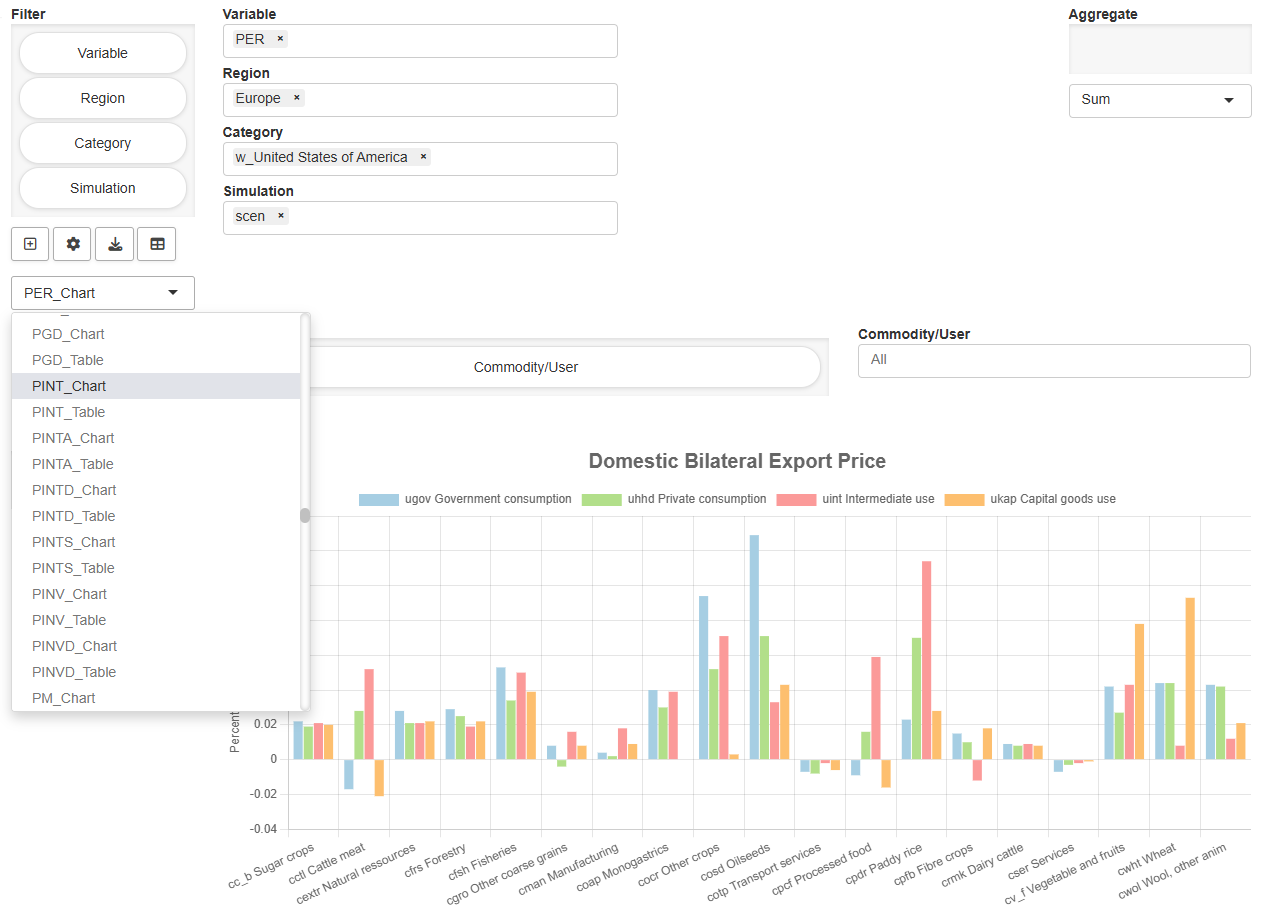
Figure 4. Views in the MIRO Pivot tool let users save and switch between predefined perspectives on high-dimensional CGE results, such as different aggregations, filters, and visualizations.
Less Reporting Code, More Analysis
“The pivot tool and baseline comparison features in GAMS MIRO make it much easier and faster to explore CGE results. My model only needs to produce the level results and GAMS MIRO handles the rest. I can quickly calculate percentage changes across scenarios, regions, and time periods, and even define groups of regions, commodities, and activities directly in the interface - without having to set them up in the model beforehand.”
— Dr Lindsay Shutes
Dashboards for Policy Storytelling
Once results have been produced, they generally need to be communicated. Decision makers rarely have the time to navigate large tables of economic output. They are usually interested in a smaller set of questions: How does GDP change? What happens to employment? Which sectors are affected most? How are households impacted? What are the environmental consequences?
GAMS MIRO enables model developers to build dashboards tailored to these questions. Key indicators can be presented through value boxes, charts, tables, and interactive visualizations that guide users toward the most relevant insights. Dashboards can be customized to reflect the specific objectives of a model, whether the focus is trade policy, climate policy, fiscal reform, or sustainable development.
Combined with scenario comparison functionality, dashboards become powerful communication tools. Analysts can move beyond presenting isolated results and instead highlight the differences between alternative policy choices, making trade-offs and policy implications easier to understand. This helps bridge the gap between economic analysis and policy communication.
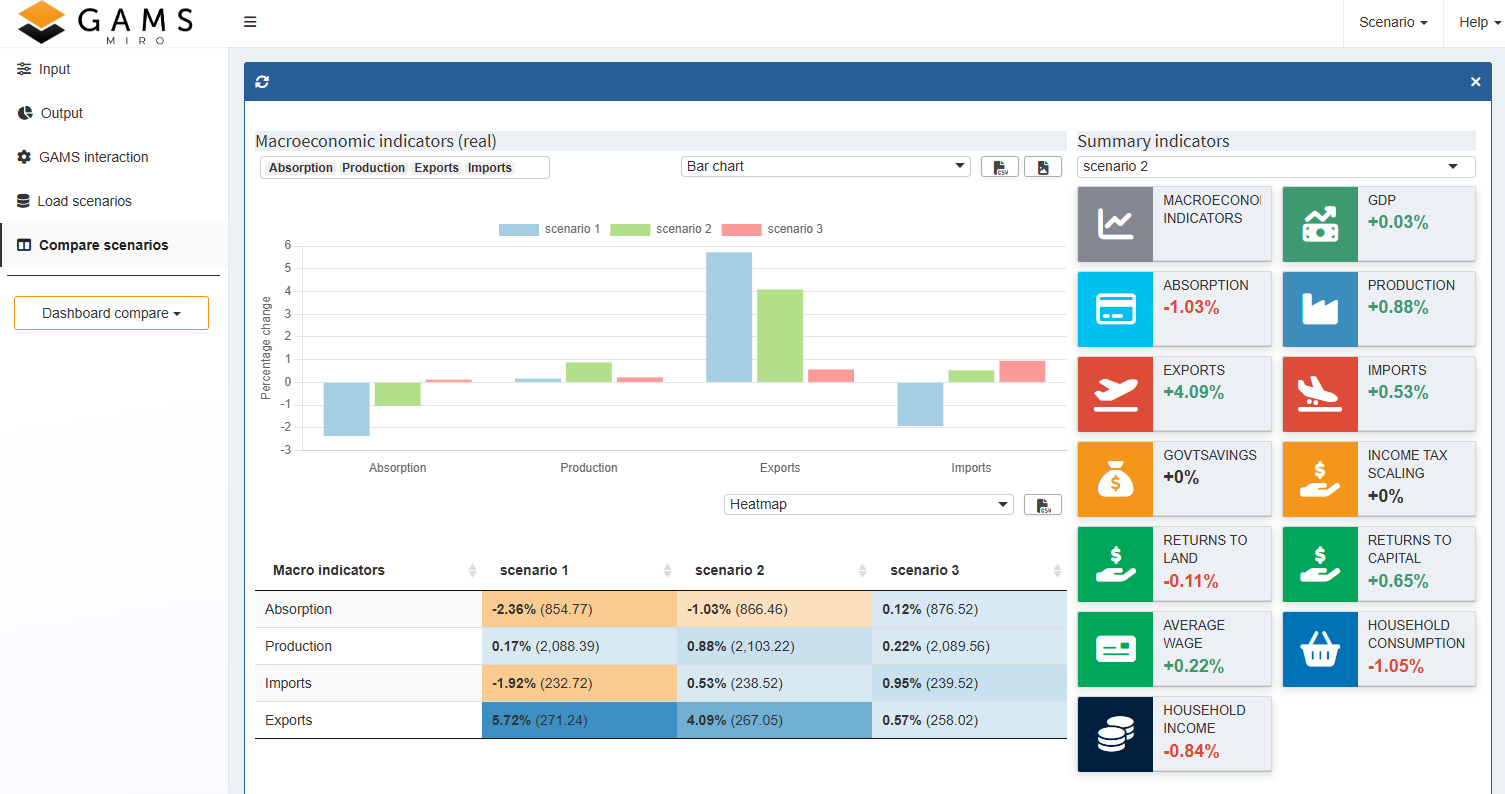
Figure 5. Three scenarios compared in a MIRO dashboard, with charts and tables showing results relative to a selected baseline.
Multiple Interfaces for Different Audiences
Not all users interact with a CGE model in the same way. A policymaker may only need a handful of key indicators and a limited set of approved policy options. An economist may want to compare closure rules and conduct sensitivity analyses. A researcher may require access to detailed sectoral outputs and calibration settings.
GAMS MIRO allows the same underlying model to support multiple interfaces tailored to different audiences. A climate-policy application can focus on emissions and energy transitions. A trade-policy application can emphasize tariffs, exports, and competitiveness. Educational versions can simplify the interface for teaching purposes, while expert interfaces can present a much broader range of model settings.
This flexibility is particularly valuable for global CGE models. Different interfaces can focus on specific regional aggregations, stakeholder groups, or policy domains while relying on the same underlying model framework. The result is a more scalable approach to model deployment, where a single CGE model can serve many different communities without duplicating development effort. At the same time, maintaining a single shared model base means that updates, bug fixes, and methodological improvements are immediately available across all interfaces, ensuring that users always work with the latest approved version.
MIRO is also particularly well suited for workshops, training sessions, and stakeholder engagement. Hosted applications allow participants to explore policy scenarios through a web browser without installing software or learning the technical details of the underlying model. During workshops, users - including policy makers and stakeholders - can modify assumptions, run approved scenarios, and immediately discuss the results.
“I appreciate how easy it is to tailor interfaces for different audiences - from a policy-focused interface with a specific set of results to a full depiction of a CGE model with a comprehensive set of outputs.”
— Dr Lindsay Shutes
Deployment, Reproducibility, and Long-Term Sustainability
Many CGE models remain in active use for decades. National planning models, trade-policy frameworks, and climate-economy models often represent years of investment in data, calibration, validation, and economic expertise.
As these models evolve, organizations face several important questions: Can results be reproduced years later? Can new team members understand established workflows? Can the model be shared safely with external stakeholders? Can it continue to operate as technology and infrastructure change?
GAMS MIRO helps address these challenges through structured workflows, integrated scenario storage, and flexible deployment options. Applications can be distributed locally, hosted on dedicated servers, or deployed in cloud environments, allowing organizations to choose the setup that best fits their security, governance, and infrastructure requirements.
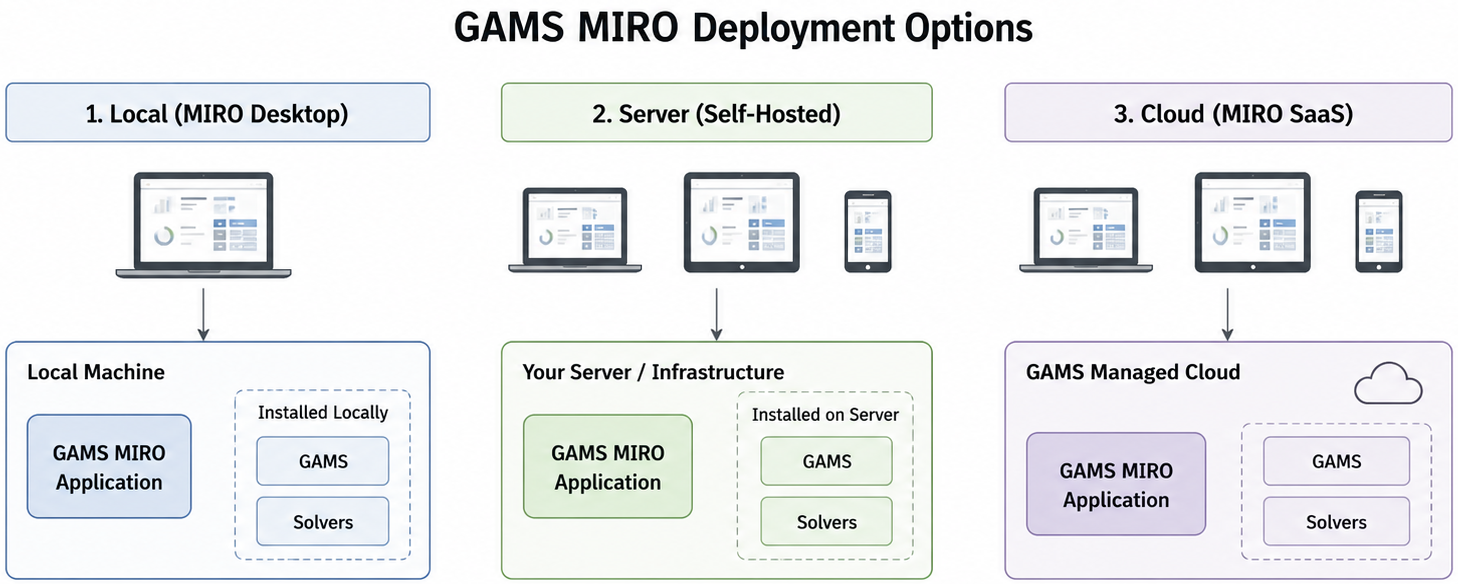
Figure 6. GAMS MIRO supports both local desktop use and cloud-based deployment, giving organizations flexibility in how they develop, share, and operate CGE applications.
At the same time, every scenario retains its associated assumptions, inputs, and outputs, helping analysts trace results back to the exact conditions that generated them.
For organizations managing long-lived CGE models, this represents an investment not only in usability but also in institutional memory and long-term sustainability.
Conclusion
CGE models have long been among the most powerful tools available for economic policy analysis. Yet their impact is often constrained by their complexity; both in terms of the models themselves and the workflows surrounding them.
GAMS MIRO addresses this challenge by transforming CGE models into interactive tools. It enables structured policy experimentation, integrated scenario management, interactive result exploration, tailored dashboards, and deployment to a wide range of users, all while preserving the power and flexibility of the underlying GAMS implementation.
The result is a new way of working with CGE models: one that allows economists to focus on economic questions, analysts to explore scenarios with confidence, and policymakers to access insights in a form that supports better decisions.
Learn More
Want to see CGE applications built with GAMS MIRO in practice?
- Try the National CGE Model Gallery App to explore a simple CGE-oriented interface and experiment with policy scenarios yourself.
- Read the case study Modernizing Global Trade Analysis: A New Era for the OECD METRO Model with GAMS MIRO to learn how GAMS MIRO makes the OECD's large-scale global trade model accessible through an interactive application.
Dr Lindsay Shutes is an economist with 25 years' experience in analyzing global and national policies. Her work focuses on sustainable development, with particular emphasis on identifying synergies and trade-offs between social, environmental and economic objectives. She is a graduate of Sheffield University (BA, MA) and Sussex University (D.Phil.). As founder of Elevate Economics, her recent work includes projects for organizations including UNFCCC, FAO and OECD.
-
GAMS MIRO is a generic tool that allows you to use any GAMS/GAMSPy model as an interactive application. ↩︎